Trading Psychology: How emotional state impacts your performance
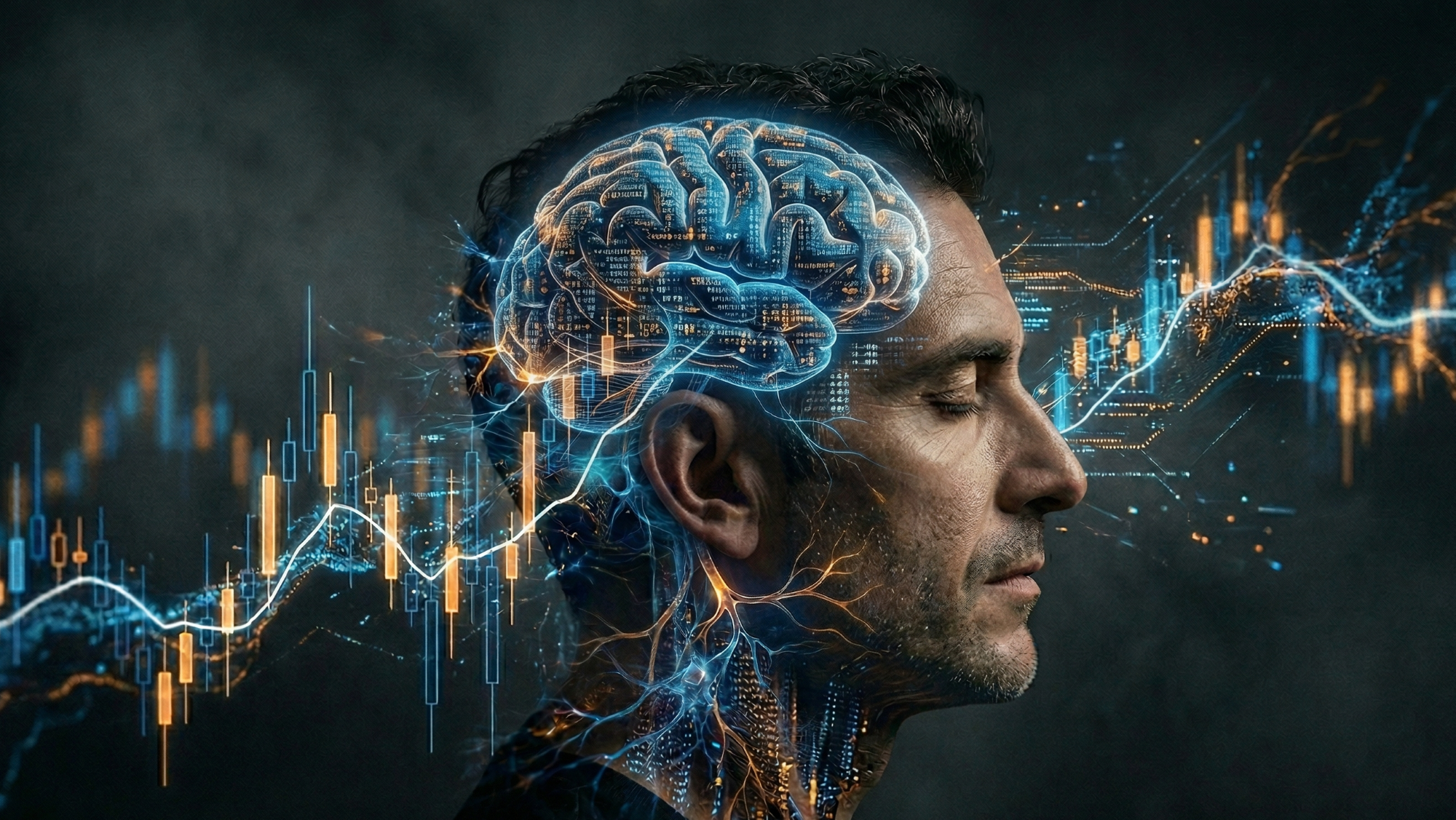
The most successful traders share one characteristic that has nothing to do with indicators or market analysis, and everything to do with how well they know themselves
Self-awareness sits at the foundation of every profitable trading decision, and yet most traders treat their emotional state as irrelevant noise rather than critical data
Your mood before you enter a trade, the stress building during a position, the euphoria or frustration after you exit, all of these emotional fluctuations create patterns that directly correlate with whether you walk away from the screen with money or without it
Understanding this connection is not optional for traders who want to consistently perform at their best, and CandlesLog's mood tracking exists precisely because this connection matters more than most traders realize
The Pre-Trade and Post-Trade Emotional Divide
Most traders focus entirely on market conditions when they should be asking themselves a simpler question first: how am I actually feeling right now
A trader who enters a position while feeling anxious, rushed, or distracted will execute that trade differently than one who is calm and centered, even when looking at the exact same chart setup
The pre-trade emotional state acts as a lens that shapes how you interpret price action, and this interpretation then drives your decisions about entry points, position sizing, and exit timing
When you log your mood before placing a trade, you create a record that reveals whether certain emotional states tend to produce better or worse outcomes, and over weeks and months this data becomes invaluable for identifying your personal trading patterns
The post-trade emotional state matters equally because it influences your very next decision
A trader who exits a winning position and immediately feels greedy will often re-enter at worse prices because the satisfaction of winning has not yet registered, while a trader who exits a losing position in frustration may chase the market revenge trading instead of waiting for a clear setup
CandlesLog allows you to capture both of these emotional snapshots, before and after each trade, so you can see the complete emotional arc of every trading session
Mood Patterns Across Winning and Losing Streaks
Winning streaks feel intoxicating and losing streaks feel crushing, but the psychological danger exists in both extremes
During a winning streak, most traders experience a gradual elevation in confidence that slowly disconnects them from the cautious mindset that made them successful in the first place
You start taking positions that are slightly too large, holding slightly longer than your rules dictate, ignoring warning signs that would have prompted an exit a month earlier
The data tells the story clearly when you track it: your win rate during winning streaks often masks a steady deterioration in your risk management that will eventually produce a catastrophic loss
Losing streaks create a different psychological trap
Frustration builds with each losing trade, and that frustration manifests as either excessive trading or no trading at all
The frustrated trader starts second-guessing every setup, over-analyzing, waiting for absolute certainty that never arrives in a market that never offers it
Meanwhile the trader who has completely shut down stops trading altogether, missing the exact recovery that often follows a prolonged slump
The value of mood tracking becomes apparent when you examine your emotion logs alongside your performance data
You might discover that your best trading weeks consistently follow nights where you slept more than seven hours, or that your worst sessions cluster around specific days when work stress was highest, or that you systematically overtrade after any loss above a certain percentage of your account
These patterns are invisible without the data, but once you see them you can actively manage your trading schedule around your emotional capacity
Energy and Stress Correlations
Your physical energy level functions as a direct multiplier on your emotional state, and both factors together determine your trading performance more than any indicator combination
A trader who is well-rested, properly fed, and operating with low background stress will process market information clearly and execute decisions without hesitation
A trader who is exhausted, running on caffeine and stress hormones, will experience the exact same market conditions entirely differently because their cognitive capacity is already compromised before they place a single trade
The markets do not care whether you slept well or had a terrible day at work, but your performance will reflect those conditions regardless
Tracking your energy and stress levels alongside your trades creates a powerful feedback loop that most traders never experience
You might learn that you are essentially useless at trading before noon because that is when your medication wears off or your blood sugar dips, or that your best performance happens in the late afternoon when you have been awake long enough to reach peak cognitive function
These are not universal rules, they are personal patterns that only become visible when you have the data to see them, and understanding your consecutive losses and worst-case scenarios becomes much more actionable when you can correlate them with your physical state
Concrete Examples of How Tracking Emotions Helps
Consider a trader named Marcus who had been struggling with consistency for two years
He was competent at analysis, had a reasonable strategy, but could not understand why his results varied so dramatically from week to week despite trading the same approach
When he started logging his mood and energy before each session he discovered something striking: his worst weeks almost always followed evenings where he had consumed more than three alcoholic drinks, and his best weeks consistently came after at least seven hours of sleep
This was not about alcohol impairing his trading directly on those evenings, it was about how alcohol disrupted his sleep architecture and left him in a low-grade exhausted state that persisted for days
He also discovered that his afternoon trading sessions outperformed his morning sessions by a significant margin, which led him to restructure his schedule and stop forcing morning trades when his mind simply was not sharp enough to execute his strategy properly
The emotion tracking did not change his strategy at all, it changed when and how he applied it, and that single adjustment transformed his consistency
Another trader, Sophia, used mood tracking to identify her revenge trading pattern
She had always known she sometimes traded emotionally after losses, but she believed it happened rarely and only in extreme circumstances
Her emotion logs revealed that she entered revenge trading mode far more frequently than she realized, often within minutes of exiting a losing position, and that these impulsive entries had a win rate of less than thirty percent compared to her normal sixty percent win rate
Once she could see the data she developed a specific rule: any trade executed within thirty minutes of a loss required a manual review and a five-minute wait period before confirmation
This single intervention eliminated her most destructive trading pattern and improved her overall performance by a percentage point that translated to thousands of dollars over a trading year
How CandlesLog Mood Tracking Works
CandlesLog integrates mood and energy logging directly into your trading workflow so that tracking your emotional state requires minimal effort
Before you open any position you can quickly select your current mood from a simple scale that ranges from highly positive to highly negative, along with your energy level and stress indicator
This data attaches to the trade itself, creating a permanent record that links your psychological state at entry to the outcome of that trade
After closing a position you log your emotional state again, capturing how the trade outcome affected you psychologically and completing the emotional arc of that specific transaction
The system then aggregates this data across your trading history and presents it in formats that make patterns immediately visible
You see your performance broken down by mood at entry, your win rate segmented by energy level, your typical emotional trajectory after wins and losses, and the specific conditions that tend to precede your best and worst trading sessions
This information removes the guesswork from your self-analysis and replaces it with concrete evidence about what your mind and body need to perform at your peak
The goal is not to eliminate emotions from trading, emotions are inevitable and even useful in appropriate doses, the goal is to understand your emotional patterns well enough that you can trade when your mind is clear and step away when your judgment is compromised
Your emotions are not your enemy, but unmanaged emotions operating without your awareness certainly are
Your brain already knows these patterns exist, mood tracking simply gives you the ability to see what your brain already knows and act on that information deliberately instead of being controlled by it
Start logging your mood with every trade today and give yourself the gift of understanding exactly how your mind affects your trading outcomes
The data will surprise you, and that surprise is worth every second you invest in the practice
Log into CandlesLog and navigate to the Mood Tracking section to begin capturing your emotional data alongside your trades, because the connection between your mind and your performance is the most important relationship you will ever analyze as a trader
Frequently Asked Questions
How does emotional state affect trading performance?
Emotional state directly impacts decision quality, risk tolerance, and execution precision. A trader in a stressed or exhausted state will interpret the same chart differently than a calm, focused trader, often taking positions that violate their own rules without realizing it. Mood tracking reveals these patterns so you can trade when your mind is clearest and step away when judgment is compromised.
What is revenge trading and how do I stop it?
Revenge trading is the urge to immediately recover losses by taking another trade, usually with poor analysis and oversized position sizes. It typically happens within minutes of a losing trade when emotions are running highest. The first step to stopping it is tracking your mood after every trade, so you can see how often it happens and develop specific rules like mandatory waiting periods before your next trade.
Can mood tracking actually improve my win rate?
Mood tracking does not change market outcomes, but it does change your awareness of conditions that lead to poor decisions. By tracking mood alongside trades, you discover specific conditions where your win rate drops significantly, such as trading while exhausted, stressed, or immediately after a loss. Once you know these patterns, you can avoid trading in those conditions and improve your overall performance.
How do I track emotions in CandlesLog?
CandlesLog allows you to log your mood, energy level, and stress indicator before opening a position and again after closing. This creates a complete emotional record for every trade that you can then analyze to identify patterns in your performance. Log into CandlesLog and navigate to the Mood Tracking section to get started.
Ready to Put This Into Practice?
CandlesLog is free. Start your trading journal today and apply what you've learned.
Start Free Journal